ITS Logistics December Port Rail Ramp Index: Trucking Regulations and Rerouting of Global Supply Chain Set the Stage for 2026
-- Shifting sourcing strategies may cause East Coast to compete with the West as preferred gateway into United States --
RENO, Nev., Dec. 11, 2025 – ITS Logistics, one of North America’s fastest-growing third-party logistics providers, today released its December forecast in the ITS Logistics US Port/Rail Ramp Freight Index. This month, the index overviews evolving policies that will shape the supply chain landscape in 2026, including new enforcement efforts against noncompliant carriers at both the state and federal level, as well as shifting global sourcing strategies. These changes are creating new considerations for planning, routing, timing, and infrastructure capabilities as shippers develop strategies for the year ahead.
“We continue to see a decline in import and export volumes through Q4, attributed to tariff-related frontloading and changes in sourcing strategy,” said Paul Brashier, Vice President of Global Supply Chain for ITS Logistics. “While there are no major demand-side pressures on the immediate horizon, significant supply-side regulatory enforcement and trucking capacity reductions are affecting inland transportation.”
On November 28, a member of California’s Punjabi trucking community reported an extensive workplace audit by the Department of Homeland Security (DHS), with agents requesting multiple years of the carrier’s I-9 documents and conducting employee interviews. The US Transportation Department is also threatening to withhold earmarked infrastructure funding and decertify CDL programs from multiple states it has deemed as noncompliant with federal licensing regulations. Most recently, an unpublished memo from the DOT reveals the agency is strategizing ways to go after “chameleon carriers," or small companies who dodge compliance requirements by repeatedly shutting down and reopening operations under new names.
States also continue taking enforcement action into their own hands, citing a desire to maintain compliance with federal regulations as well as shared interest in highway safety. In a landmark case, California has introduced what is expected to be first AB5 enforcement action against a trucking company. AB5, which is the state’s independent contractor classification law, went into effect in 2020 and is now being used for the first time to bring enforcement action against companies in the trucking industry. The case cites not just a carrier but two major shippers, aligning with previous statements from Transportation Secretary Sean Duffy that companies should be held liable for the drivers they hire as a means of enhancing compliance.
Multiple states are also conducting their own roadside enforcement stings, revoking thousands of incorrectly-issued CDLs en masse, and even phasing out non-domiciled CDL programs. These concerted efforts, in combination with rising rates of financial insolvency among carriers, are culling the 2026 capacity pool of both inland and drayage providers, which will likely result in swift capacity crunches as demand returns.
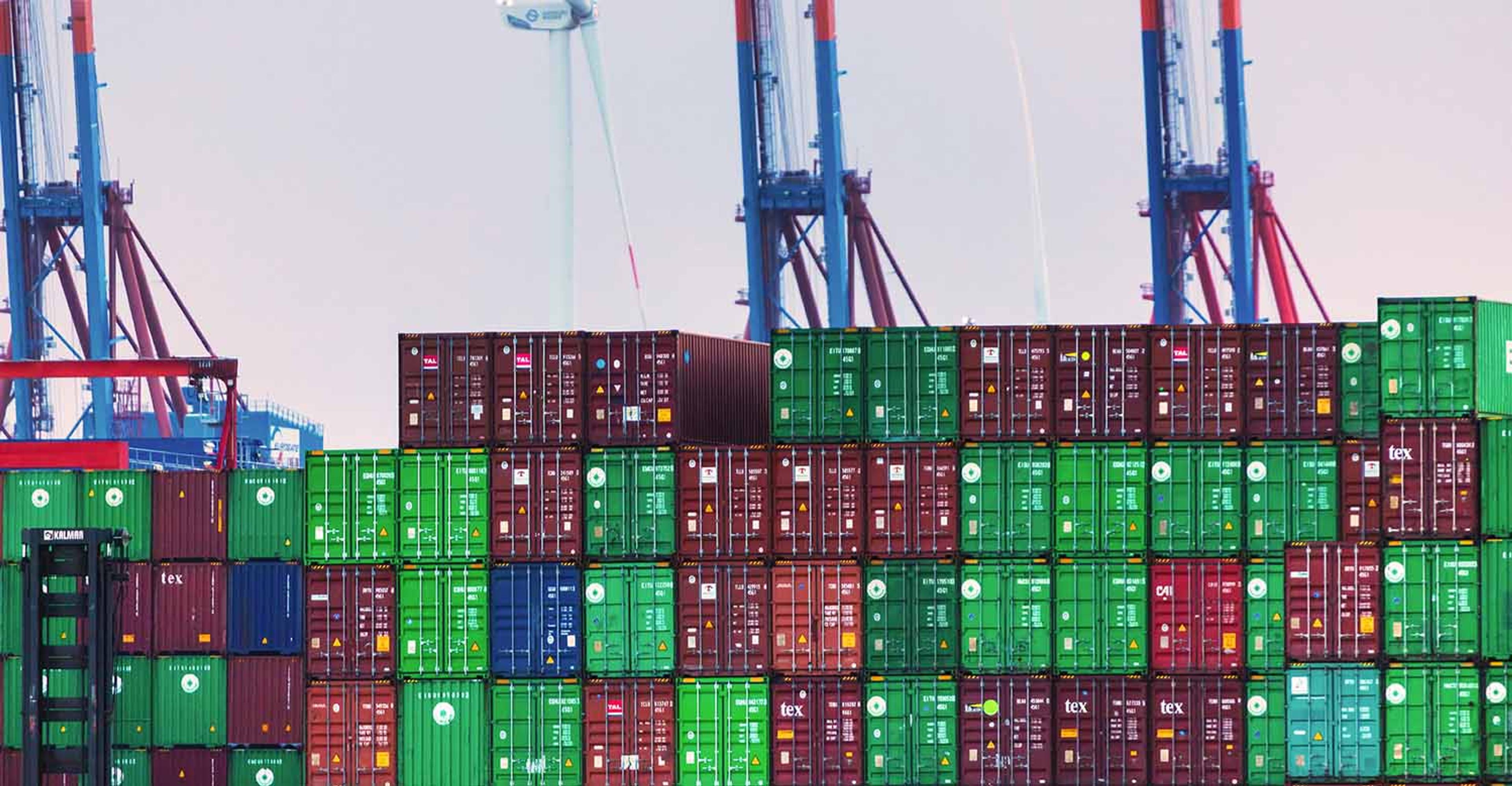
At the ports, container volumes for November totaled 2,183,048 twenty-foot equivalent units (TEUs), down 5.4% month-over-month but aligned with typical seasonal trends. Of note, China-origin imports saw the sharpest dip at 11.3% over October numbers. With the exception of October, China-origin imports have seen consistent volume pullback since August. This decrease in volume aligns with the latest of the Trump Administration’s tariffs against China’s biggest import categories, with the most recent being furniture.
In response to tariffs, US shippers and importers have been shifting sourcing away from China and towards Southeast Asia and India. The migration has pushed trans-Atlantic ocean capacity to a 28-month high, with the average vessel size also increasing to nearly 6,200 TEUs to accommodate growing demand.
“In addition to reduced drayage capacity, shifts in global supply chain sourcing could place pressure on shippers in 2026,” Brashier continued. “At countries of origin, regional challenges such as limited container availability and lack of deep-water ports should be of concern. Domestically, a combination of the post-tariff sourcing adjustments and the reopening of the Red Sea to containerized cargo could also drive a paradigm shift where the East Coast overtakes the West as the preferred gateway, fundamentally changing US supply chain strategy.”
ITS Logistics offers a full suite of network transportation solutions across North America and distribution and fulfillment services to 95% of the US population within two days. These services include drayage and intermodal in 22 coastal ports and 30 rail ramps, a full suite of asset and asset-lite transportation solutions, omnichannel distribution and fulfillment, LTL, and outbound small parcel.
The ITS Logistics US Port/Rail Ramp Freight Index forecasts port container and dray operations for the Pacific, Atlantic, and Gulf regions. Ocean and domestic container rail ramp operations are also highlighted in the index for both the West Inland and East Inland regions. Visit here for a full, comprehensive copy of the index with expected forecasts for the US port and rail ramps.
About ITS Logistics
ITS Logistics is one of North America's fastest-growing, asset-based modern 3PLs, providing solutions for the industry’s most complicated supply chain challenges. With a people-first culture committed to excellence, the company relentlessly strives to deliver unmatched value through best-in-class service, expertise, and innovation. The ITS Logistics portfolio features North America's #18 asset-lite freight brokerage, a top drayage and intermodal provider, an asset-based dedicated fleet, an innovative cloud-based technology ecosystem, and a nationwide distribution and fulfillment network.
Related articles
News + resources
ITS Logistics June Port/Rail Ramp Freight Index: Drayage and Intermodal Markets Brace for Downstream Price Surges
portRailIndex | US Port/Rail Ramp Freight Index
ITS Logistics' June Port Rail Ramp Index warns drayage and intermodal markets of capacity exits, fuel spikes, and price surges ahead of 2026 peak season.
ITS Logistics May Port/Rail Ramp Freight Index: Strait of Hormuz Closure Sends Fuel Shock Through Supply Chains
portRailIndex | US Port/Rail Ramp Freight Index
The Strait of Hormuz closure is sending fuel costs soaring and reshaping US port activity. See what's ahead in ITS Logistics' May Port/Rail Ramp Freight Index.
ITS Logistics April Port/Rail Ramp Freight Index: Hormuz Crisis and Capacity Squeeze Drive First Sustained Cost Increases Since COVID
portRailIndex | US Port/Rail Ramp Freight Index
All US port and rail regions are elevated. ITS Logistics' April Port/Rail Ramp Index covers the Hormuz crisis and capacity crunch hitting shippers now.