ITS Logistics April Port/Rail Ramp Freight Index: Hormuz Crisis and Capacity Squeeze Drive First Sustained Cost Increases Since COVID
-- Trucking capacity exits, rising fuel costs, and Middle East shipping disruptions converge to push all index regions to elevated status as shippers face post-COVID era transportation price increases --
RENO, Nev., Apr. 16, 2026 (GLOBE NEWSWIRE) – ITS Logistics, an Echo Global Logistics company, today released its April forecast in the ITS Logistics US Port/Rail Ramp Freight Index. This month, the index elevates all port and rail ramp regions to levels of concern, as the ongoing Strait of Hormuz crisis collides with four years of trucking capacity exits, driving higher fuel costs amid surging seasonal demand. The convergence is producing the first sustained transportation cost pressure since the post-pandemic freight cycle, compounded by rising cargo theft and tightening driver regulation enforcement.
“Shippers should be prepared for post-COVID era increases in transportation costs this month,” said Paul Brashier, Vice President of Global Supply Chain for ITS Logistics. “Trucking capacity exits over the past 48 months are finally being felt in all regions, with the trend accelerated by ongoing federal and state enforcement efforts to address non-domiciled drivers and English-language proficiency standards. This decrease in capacity is now converging with increases in tariff-driven domestic material sourcing and geopolitical conflict.”
The Strait of Hormuz remains the single largest disruptor to global freight flows this spring. Since the conflict began on February 28, more than 34,000 shipping routes have been diverted from the Strait, according to Project44. The disruption is not limited to energy markets; raw materials and fuel inputs critical to manufacturing in Asia also transit the corridor, and the blockade is forcing global buyers to reconsider sourcing strategies. As a result, US exporters are gaining attention as an alternative. for materials, particularly resins and petrochemicals, that were previously routed through—and in some cases, sourced from—the Middle East, adding further demand pressure to an already constrained domestic transportation network.
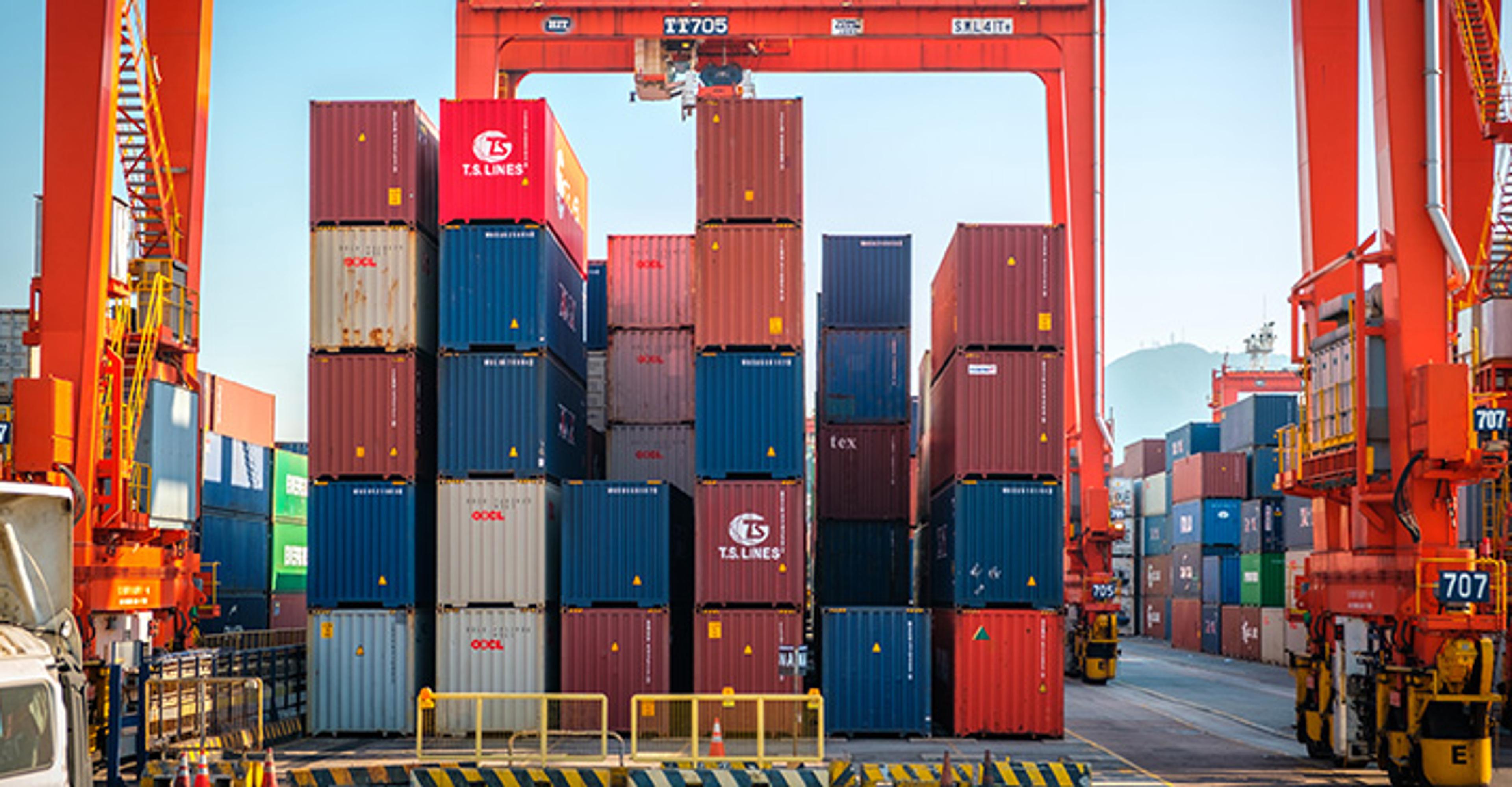
Total containerized imports reached 2,353,611 Twenty-foot Equivalent Units (TEUs) in March, up 12.4% month-over-month from February but down 1.1% compared to March 2025, per Descartes. The monthly rebound aligns with typical seasonal patterns, though China-origin imports declined 2.3% from the prior month and 6.7% year-over-year—a trajectory consistent with ongoing tariff-driven sourcing shifts away from Chinese manufacturing.
On the fuel side, benchmark diesel prices recently ended a 12-week streak of consecutive increases, though prices remain elevated well above pre-conflict levels. The sustained rise in diesel has put a floor under trucking rates, according to DAT’s principal analyst Dean Croke. The burden of fuel prices has reignited interest in zero-emission capacity, which has seen growth stagnate over the past two years in the face of regulatory changes and infrastructure challenges.
Federal and state enforcement efforts targeting non-domiciled commercial driver’s licenses and English-language proficiency compliance continue to accelerate the removal of capacity from the driver pool across all regions, adding to overall cost pressures for shippers. In California, March marked the end of an administrative grace period extended to 20,000 non-domiciled commercial driver’s license holders, with state officials announcing that approximately 13,000 licenses would be cancelled to ensure state compliance with federal regulations. California’s capacity pool serves three of the nation’s busiest gateways, which together accounted for more than a third of total containerized trade activity in 2025. Nationwide, trucking capacity is currently already being strained by the height of produce season, which is pulling refrigerated and dry van equipment into agricultural lanes.
Freight fraud and cargo theft are adding risk on top of the capacity squeeze. Estimated fraud losses surged 60% in 2025, according to industry analyst firm Verisk CargoNet, expanding in target scope, average theft value, and operational complexity. Food and beverage was the top stolen commodity category, a trend exemplified by the recent theft of an entire Formula 1 KitKat shipment, in which thieves posing as law enforcement intercepted the load—a variation of the fictitious pickup schemes that have become one of the most prevalent forms of cargo theft.
“In addition to trucking capacity, theft and freight fraud also continue to be problematic in rail ecosystems, especially at locations where freight is interlining between railroad providers,” Brashier continued. “Memphis, Chicago, and LA are of concern at this time.”
ITS Logistics offers a full suite of network transportation solutions across North America and distribution and fulfillment services to 95% of the US population within two days. These services include drayage and intermodal in 22 coastal ports and 30 rail ramps, a full suite of asset and asset-lite transportation solutions, omnichannel distribution and fulfillment, LTL, and outbound small parcel.
The ITS Logistics US Port/Rail Ramp Freight Index forecasts port container and dray operations for the Pacific, Atlantic, and Gulf regions. Ocean and domestic container rail ramp operations are also highlighted in the index for both the West Inland and East Inland regions. Visit here for a full, comprehensive copy of the index with expected forecasts for the US port and rail ramps, including the index’s new Inland Transportation Risk Outlook, which provides regional insight into key events and conditions influencing the trucking market.
About Echo Global Logistics
Echo Global Logistics, Inc. is a leading provider of technology-enabled transportation and supply chain management services. Headquartered in Chicago with more than 60 locations across North America, Echo offers freight brokerage and Managed Transportation Solutions across all major modes including Truckload, Partial Truckload, LTL, Intermodal, Cross-Border, Food-Grade and Temperature-Controlled shipping and warehousing, and Warehouse Services. Echo leverages its proprietary technology platform — including automation, machine learning, and AI-driven decision support — to help customers optimize transportation performance, improve visibility, and simplify supply chain execution across complex supply chains. For more information on Echo Global Logistics, visit: www.echo.com.
About ITS Logistics
ITS Logistics, an Echo Global Logistics company, is one of North America’s fastest-growing, asset-based modern 3PLs, providing solutions for the industry’s most complicated supply chain challenges. With a people-first culture committed to excellence, the company relentlessly strives to deliver unmatched value through best-in-class service, expertise, and innovation. The ITS Logistics portfolio features North America’s #18 asset-lite freight brokerage, a top drayage and intermodal solution, an asset-based dedicated fleet, an innovative cloud-based technology ecosystem, and a nationwide distribution and fulfillment network.
Related articles
News + resources
ITS Logistics June Port/Rail Ramp Freight Index: Drayage and Intermodal Markets Brace for Downstream Price Surges
portRailIndex | US Port/Rail Ramp Freight Index
ITS Logistics' June Port Rail Ramp Index warns drayage and intermodal markets of capacity exits, fuel spikes, and price surges ahead of 2026 peak season.
ITS Logistics May Port/Rail Ramp Freight Index: Strait of Hormuz Closure Sends Fuel Shock Through Supply Chains
portRailIndex | US Port/Rail Ramp Freight Index
The Strait of Hormuz closure is sending fuel costs soaring and reshaping US port activity. See what's ahead in ITS Logistics' May Port/Rail Ramp Freight Index.

ITS Logistics March Port/Rail Ramp Freight Index: Fresh Geopolitical Uncertainty Disrupts Stabilizing Trade Behavior
portRailIndex | US Port/Rail Ramp Freight Index
Geopolitical tensions, shifting US tariff policy rising cargo theft are pressuring global shipping networks, according to the ITS Logistics February Port/Rail Ramp Freight Index.