What Brands Get Wrong About 3PL Warehouses: Insights from Izba and ITS Logistics
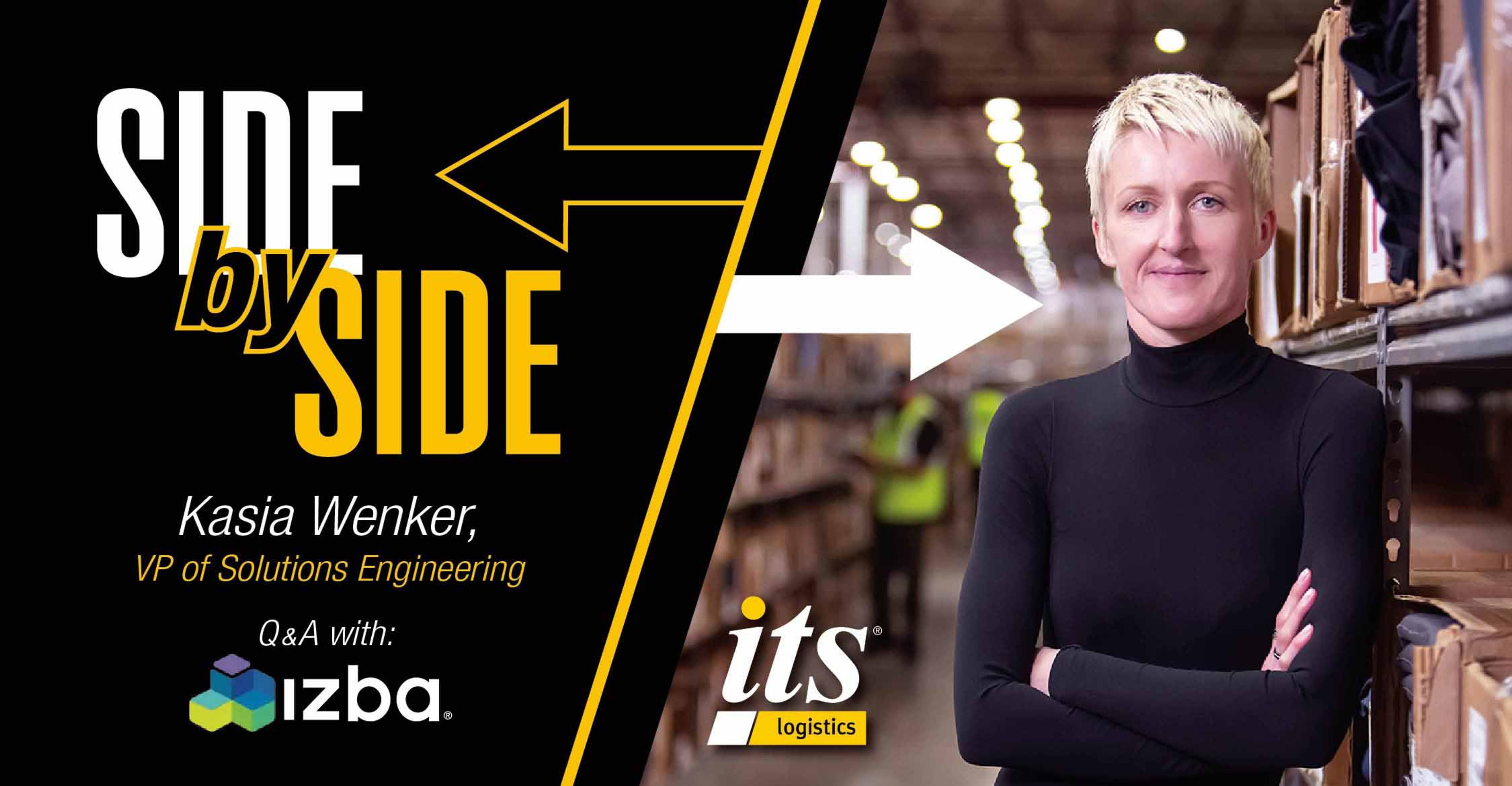
What does real partnership look like in supply chain? “Side-by-Side” dives deep into how different components of logistics link up to create stronger, more efficient operations. From new technology and innovative processes, ITS’s Kasia Wenker and her guests explore how they’ve found success through strategic collaboration.
Q&A with Izba, a supply chain consulting firm offering specialized services in the optimization of the supply chain.
Can you share who Izba is and the services you provide to emerging and established brands?
Izba: Izba Consulting is part of the Izba Group, an ecosystem of supply chain companies working together to solve different parts of the founder's journey.
Izba Consulting is an end-to-end supply chain consulting company that helps founders with whatever comes next. That could be entering a new channel, expanding to a new country, raising capital, or preparing to exit. We've helped create $2.5B in exits so far by doing the daily blocking and tackling of running a business: managing vendors, forecasting, retail operations, and all the operational complexity that founders don't always have time or expertise to handle in-house.
We offer fractional leadership roles like VP of Operations or provide temporary coverage during transitions like parental leave. We also drive transformation changes for brands that need to fundamentally rethink how they operate. The core idea is straightforward: emerging and established brands need expertise on demand. They don't always need a full-time executive, but they need someone who's done this before to help them navigate critical decisions and avoid expensive mistakes.
The Izba Group also includes two sister companies. Sourcify helps brands find factories through a highly curated network of manufacturers across 15 countries, helping brands reduce costs, improve quality, and lower geographic risk. Slotted works with fulfillment providers to identify which brands are the right fit for their operations and gives both brands and providers the tools to build a modern RFP experience.
What matters most to brands when they evaluate their fulfillment and supply chain needs?
Most brands focus on three core areas: service levels, technology capabilities, and pricing. What's often overlooked is the funding question, understanding whether a 3PL is self-funded, backed by debt, or venture-backed tells you a lot about their long-term trajectory and whether they might be sold or restructured down the line.
The reality is that your 3PL is handling your product at the most critical moment. They're the last people outside of the postal worker to touch individual units before they reach customers. So the question isn't just "can they fulfill orders?"—it's "do I trust them to remain stable as my partner?" Financial stability signals trustworthiness in ways that a polished sales pitch never can.
How has the approach to selecting a 3PL evolved in recent years? What are brands looking for now that they didn't prioritize before?
The biggest shift is moving from a transactional relationship to a true partnership model. Five years ago, brands would evaluate 3PLs primarily on cost and capacity. Today, scaling brands want a 3PL that acts as an extension of their internal operations, someone who proactively spots issues, joins their internal planning calls, and thinks like a warehousing manager, not just an account executive.
Brands are also getting smarter about exit strategies. They're asking upfront about what happens if the 3PL gets acquired or if ownership changes. This represents a maturity in how brands think about risk. They're no longer just looking for someone to hold inventory; they're looking for a partner they can trust won't abandon them if the business model shifts.
Another evolution: brands are more willing to work with consultants and structured RFP processes. They recognize that doing the work upfront to find the right partner saves enormous headaches during implementation and beyond.
When you guide a brand through a 3PL launch, what steps do you consider essential for a smooth and successful start?
The first and most critical step happens before you ever sign a contract: prepare your operational data. Brands need to gather historical sales data, inventory snapshots, unit density information, and channel-specific metrics. Think like a warehouse would think about what information they need to accurately price and plan for your business. Too much data isn't a bad thing. It's what your incumbent warehouse already has, so transparency here sets you up for success.
Second, structure your RFP process in phases. Start with a kickoff that focuses purely on data gathering and alignment. Then do initial outreach with high-level information to engage potential 3PLs before formal RFP release. This creates investment and understanding on both sides.
Third, and this is critical: manage handoffs carefully throughout the partnership lifecycle. Most 3PLs split ownership into three phases: RFP/Sales, Onboarding, and Go-Live. Each stage often brings in new team members, and brands end up re-explaining needs that were already covered. The key is to bring the next phase lead into the prior stage. Have the onboarding manager join late in the RFP so the brand starts building trust early. Bring in the future account manager during onboarding, since they'll be the long-term partner. This simple shift reduces confusion, strengthens communication, and shows brands you're invested beyond just closing the deal. Winning the brand isn't the end. It's the start of a relationship.
Fourth, run war games scenarios before go-live. Create five to ten realistic scenarios, such as implementation delays, inventory in transit complications, and system integration issues, then have the brand and 3PL work through responses together. This ensures you have Plans B, C, and D already in place, so when something goes wrong (and it will), you're not improvising under pressure.
Finally, commit to an intensive hypercare phase for at least eight weeks post-go-live. This means weekly operational calls, immediate issue resolution, and someone from the implementation team actively involved in troubleshooting. This is where most failures get caught and fixed early.
Once the partnership is in place, what does ongoing success with a 3PL look like? What do the best-prepared brands do well?
The best-prepared brands treat their 3PL as an internal extension rather than an external vendor. They invite their 3PL to join internal operations meetings three months out so the 3PL understands what's coming and can plan accordingly. They don't wait for problems to bubble up; the 3PL is proactively flagging issues with SKUs, return rates, or operational changes.
Success looks like communication that flows in both directions without friction. The 3PL manager is acting as a true warehousing manager, not just processing transactions. They understand the brand's business growth trajectory, seasonal pressures, and strategic priorities.
Ongoing success also means the 3PL is meeting the service level agreements they committed to in the RFP, but it goes deeper than that. It means they're optimizing operations on your behalf, suggesting consolidation strategies, identifying cost-saving opportunities, and actively working to improve your fulfillment economics as you scale.
The relationship should feel collaborative, not adversarial. Issues get raised and resolved quickly because there's mutual trust that both parties are acting in good faith.
What common misconceptions do brands have about 3PLs, and how do you help reset expectations?
The biggest misconception is that the RFP prices are final and that everything promised during the sales process will be delivered as-is. The reality is that roughly 5 to 10 percent of 3PLs fail to deliver on RFP commitments. We can see this growing, given the current state of the market and 3PLs making more desperate Hail Marys to stop the bleeding. This isn't always malicious. It's usually because sales wrote a check that operations couldn't cash. The salesperson sold aggressively to close a deal, but the operations team never got properly briefed on what was promised.
Another misconception is that what's on the rate card is fully what impacts operational costs with the brand. The rate card doesn't include possible chargebacks from retailers because the 3PL oversold retail operations capabilities. It doesn't account for internal bandwidth that gets consumed when a 3PL is so lean on pricing that they're not profitable and therefore not proactive. Brands will need to spot issues ahead of time, causing more work needed on the brand side. The rate card also doesn't capture customer experience impact. Having misships or late shipments drastically impacts customer experience and can hinder brand recognition and customer retention.
A third misconception is that more features or capabilities from a 3PL automatically means better service. Brands sometimes get distracted by flashy features or impressive tech stacks when what actually matters is how well that 3PL understands their specific business and whether they'll be responsive when issues arise.
Brands also underestimate how much of the burden falls on them to provide clean, detailed operational data and clear requirements. If you go into an RFP without proper data preparation, you'll get vague pricing that doesn't reflect reality.
I reset expectations by being transparent about what typically goes wrong: communication gaps between a 3PL's sales and operations teams, inadequate implementation planning, and underestimation of the complexity involved in switching providers. By naming these risks upfront, brands understand why the preparation and hypercare phases are so critical.
When you're evaluating potential 3PL partners for clients, what differentiators stand out as signals of long-term success?
I look for engagement and responsiveness from day one. Does the salesperson respond quickly to your RFP release? Do they ask thoughtful, clarifying questions that show they're genuinely trying to understand your business? Or are they just filling out a form? The salesperson is the representation of the 3PL. How they act is a direct implication of how the brand will view the 3PL long-term.
I also watch how 3PLs handle constraints and limitations. If a 3PL says, "We can't support that channel," I actually view that as a positive signal. It shows they've thought critically about what they can deliver versus what they're overselling. Honesty about capabilities increases my confidence far more than vague "we can figure it out" responses.
Red flags include a 3PL that brings excessive people to meetings but half of them don't engage, asks repetitive questions that are already answered in the RFP document, or ignores process instructions like submitting pricing in a non-standard format. These behaviors signal poor internal communication and an unwillingness to follow a structured process, both predictors of implementation friction.
Finally, I look for a 3PL's willingness to work collaboratively with consultants. I'm not testing them or gatekeeping. I'm there to be a translator between what a brand needs and what a 3PL offers, helping both sides communicate clearly and manage expectations. A 3PL that sees the consultant as a partner rather than a competitor is showing the right mindset for long-term success.
What trends or shifts in consumer expectations are shaping how brands should think about their fulfillment strategy?
During COVID, there was a strong "buy local" sentiment combined with a boom in small ecommerce businesses fueled by extra disposable income and additional time at home. Malls and retailers were also closed, which further pushed consumers to make purchases from small ecommerce stores.
Now that malls and retailers are open again, we're seeing customers push back toward in-store purchases. This shift is forcing brands to move into retail channels either to continue growing or stay stable. As a result, omnichannel fulfillment capabilities are becoming a growing necessity within the community. Brands can no longer just think about D2C fulfillment. They need 3PLs that understand retail operations, can manage inventory across channels, and can fulfill orders seamlessly, whether they're coming from ecommerce, retail, or wholesale channels.
This fundamental shift means brands need to evaluate 3PLs not just on their ability to pick and pack, but on their ability to manage complex, multi-channel operations.
How do you see technology—data visibility, forecasting, integrations—impacting brand readiness and 3PL selection?
Technology is absolutely a decision factor, but it's not a differentiator in the way many brands think it is. 3PLs have made large investments into their internal and external tech stacks. Most have a WMS, forecasting capabilities, and integration options. What matters is how customizable and reliable those integrations are for your specific tech stack.
The real tech conversation is about data flow. Can the 3PL integrate cleanly with your e-commerce platform? What about your ERP system? Are they going to be responsive when a Shopify plugin breaks? These practical integration questions matter far more than the flashy features on their sales deck.
Brands should also understand that technology requirements vary dramatically based on their business model. A D2C brand with straightforward fulfillment needs has very different tech requirements than a B2B brand doing complex kitting or a brand managing multiple channels simultaneously. The RFP process should surface these requirements clearly so that 3PLs can price accurately and commit to what they can actually deliver.
What does a strong partnership between Izba and a 3PL look like from your perspective?
A strong partnership starts with mutual respect. Izba represents the brand's interests and brings structured process expertise to what can otherwise be a chaotic RFP. From the 3PL side, it means being willing to work within that framework, not circumvent it, and asking meaningful questions that show engagement.
The best partnerships recognize that working well with consultants benefits everyone long-term. We influence decisions, provide feedback that helps 3PLs improve, and recommend them to other brands in our network. That's worth far more than any short-term tactical win.
Here's what makes a great 3PL partner: they understand that a consultant's job is to get the brand the best outcome. When a 3PL respects that and works collaboratively, we naturally want to work with them again. We remember which 3PLs have been responsive, transparent, and honest throughout the process. That repeated work together builds mutual understanding of capabilities, communication styles, and how to work best together. But all of that serves the brand first.
If a brand could only focus on one thing before engaging a 3PL, what should it be?
Get clear on your growth goals. Where does the brand want to be at the time of go-live? What about 1 year post, 2 years post, and beyond? Do they want to expand into retail channels? Grow their SKU base? Expand internationally?
This clarity drives everything else. It shapes what 3PL capabilities you need, what geographic footprint matters, what technology integrations are critical, and what capacity the 3PL needs to build for. Without this directional clarity, you'll select a 3PL optimized for your current state rather than your future state, which creates problems down the line when you outgrow them or need capabilities they don't have.
Operationally, you also need to prepare your data. Gather historical sales data by channel, inventory snapshots, unit density information, and inbound projections. But the why behind all that data preparation is about understanding your growth trajectory and making sure the 3PL can support it.
Looking ahead, what do you believe the most successful brands will do differently in their supply chain strategy?
The most successful brands will treat 3PL partnership as a core strategic priority rather than a procurement decision. They'll invest in finding the right partner, not just the cheapest option. They'll understand that their 3PL's stability and long-term viability directly impact their ability to scale.
Successful brands will also get proactive about exit flexibility and partnership terms. Instead of accepting standard contracts, they'll negotiate for flexibility if the 3PL is acquired or if ownership changes. They'll understand funding models and ask hard questions about where the 3PL's money is coming from.
Most importantly, they'll shift from viewing their 3PL as a vendor to viewing them as a core member of their operations team. They'll be transparent about their growth plans, invite the 3PL into strategic conversations, and work collaboratively to solve problems. They'll recognize that a 3PL that understands their business and cares about their success is worth far more than one that's just processing transactions.
The best brands will also invest in structured implementation processes: RFPs done well, war game scenarios, and dedicated hypercare phases. They recognize that how you launch impacts everything that comes after. A rough go-live creates friction for years; a smooth one builds momentum and trust.
How Can We Help?
Related articles
News + resources
Is Your Brand Ready to Go Viral? Why CPG and Wellness Brands Need Omnichannel Fulfillment Providers
Blog | Distribution + Fulfillment
Growing consumer brands dream of going viral, but few plan for the logistics of overnight success.

Inventory Turns Are a Capital Choice | Inventory Economics 301
Blog | Distribution + Fulfillment
Learn how supply chain leaders can engineer inventory turnover to improve cash flow, reduce carrying costs, and strengthen balance sheet performance.

Navigating Returns Season: How Reverse Logistics Shapes the Customer Experience
Blog | Distribution + Fulfillment
Learn how reverse logistics shapes the customer experience—from faster refunds and fraud to scalable operations built for today's ecommerce trends.