Paving the Way: The Role of Third-Party Logistics Companies in Driving Alternative Fuel Use Across the Supply Chain
SupplyChainBrain
February 2, 2026
Lauren Miller & Josh Allen
FROM THE 2026 ANNUAL RESOURCE GUIDE:
Analyst Insight: 3PLs have exceptional influence in driving the growth of cleaner fuel alternatives. Their position as an intermediary provides them with data and partnerships that prime them to be stewards of more sustainable logistics—while providing new value in the process.
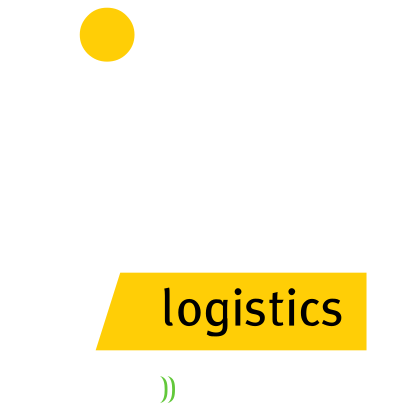
Startups in the clean logistics space are working diligently to identify the best opportunities for building infrastructure: EV and hydrogen tractors, charging and refill stations, biodiesel conversions, etc. However, they face a chicken or egg scenario: How do we justify investment without knowing there will be shipping volume? Conversely, how can there be shipping volume without investment?
This is where opportunity lies for 3PLs to be a steward and market leader. They may not own the trucks or freight, but they possess a valuable asset in a fragmented market: data. Lane density, volume, carrier behavior, rates, and shipper goals reveal insight for making sustainable fuel sources more cost-effective through scale and network optimization. They sit in a unique position to have broad influence over the market—not pushing or pulling from one side or the other but orchestrating from the middle to bring shippers, carriers, and clean emissions solutions together towards a common goal.
Actions to Take in the Next Several Years:
Reset the Goalposts: Realistically, a zero-emission supply chain will not be feasible in the next decade. However, multiple alternatives offer between 20% and 80% emission reductions. The goal here is to strive towards doing better. This comes back to the core of sustainability: identifying actions businesses can realistically commit to over both the short and long-term to incrementally decrease the carbon footprint of the supply chain.
Become Emission Experts: While EV is the gold standard, it is not without limitations. Given a lack of charging infrastructure along freight corridors, biodiesel or compressed natural gas is a more feasible alternative fuel than EV for long haul. When you understand the capabilities and limitations of each fuel source, you’re able to offer more practical, cost-effective solutions to shippers.
Have Strategic Conversations: This is where a 3PL’s ability to leverage partnerships becomes critical to sustainability initiatives.
- With shippers: Understand their environmental, social, and government priorities; emission reduction goals; and freight network
- With carriers: Identify partners who want to expand their reduced emission capabilities and assist in quantifying ROI—even supporting investments in equipment and modifications when possible.
- With clean fuel partners: share network data that allows them to identify true volume potential and justify technology, equipment, and infrastructure investment.
Anticipated Challenges
Infrastructure development will remain uneven for several years. Charging deserts and limited refueling options for both biodiesel and compressed natural gas (CNG) along major freight corridors require continued multi-pronged investment. Similarly, regulatory complexity—for example, state-by-state truck weight regulations—will complicate interstate routes. Finally, having the ability to capture, analyze, and report real and defensible scope 3 data continues to be a challenge for most 3PLs.
And of course, many are quick to point to the current shift in environmental protection efforts. While domestic political cycles may influence government incentives, major companies and international shippers continue advancing ESG goals because it is a pillar of their brand values. Sustainability, therefore, remains a long-term business priority and means of “future-proofing” operations.
Outlook: It won’t be long until we see more shippers—especially international companies, Fortune 500s, and Certified B Corporations—raise their expectations for sustainable logistics. Reduced emissions solutions will continue to grow in priority until it is table stakes for transportation providers across the supply chain, and well-prepared 3PLs will continue to unite shippers, carriers, and clean emissions solutions to drive change.
Related articles
News + resources
Four Steps to Decarbonize Your Supply Chain in 2026
Blog | Sustainability
Lauren Miller, ITS Logistics Sustainability Manager, breaks down how to measure, reduce, and report Scope 3 emissions across your supply chain.
Understanding Southern California’s WAIRE Program and How Our Solution Can Help
Blog | Sustainability
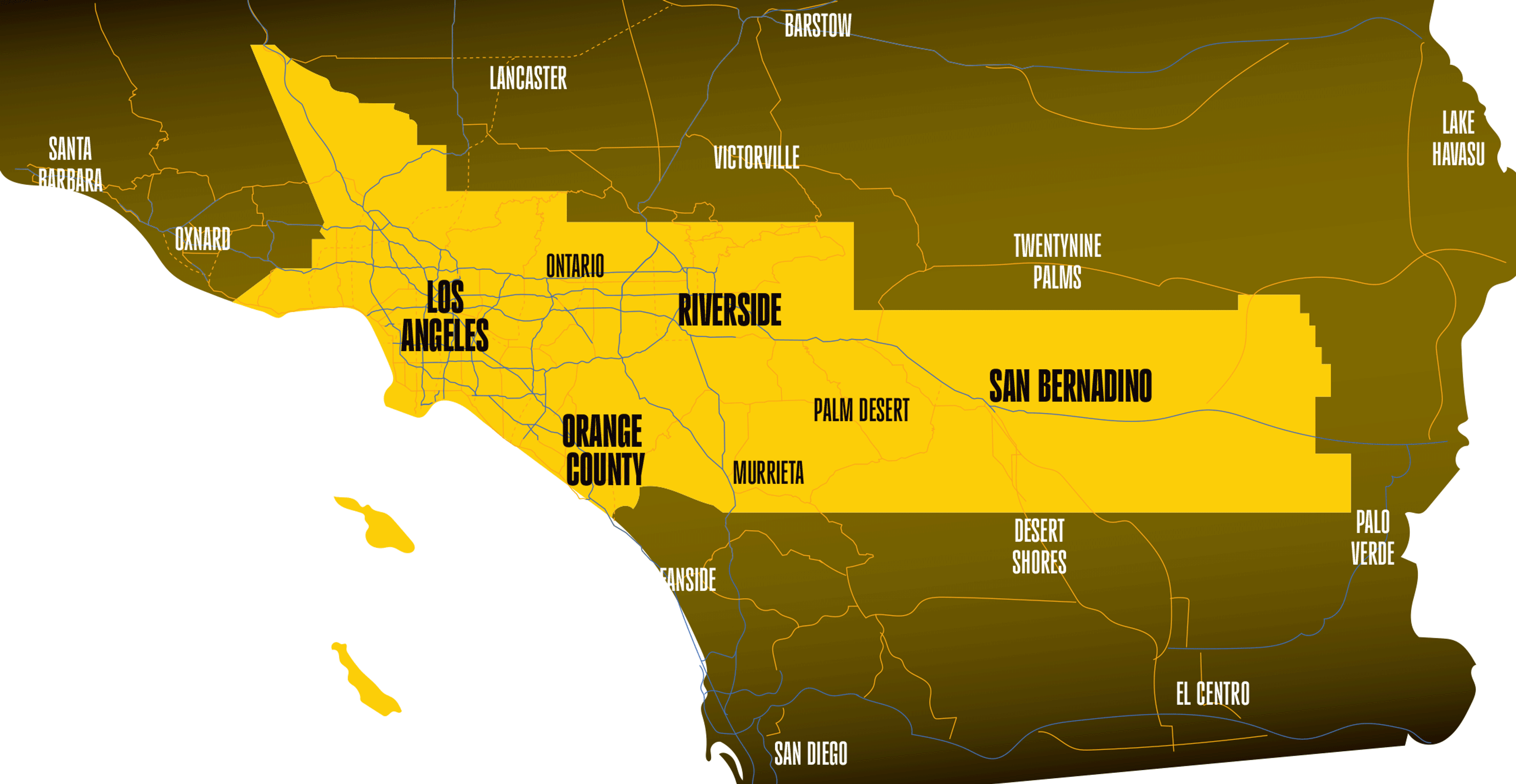
Learn how Southern California’s WAIRE Program impacts warehouse operators and discover strategies to achieve compliance.

The Circular Economy: A Sustainable Approach This Holiday Season
Blog | Sustainability
Discover how the circular economy transforms holiday logistics through sustainable packaging, transportation, and waste reduction.